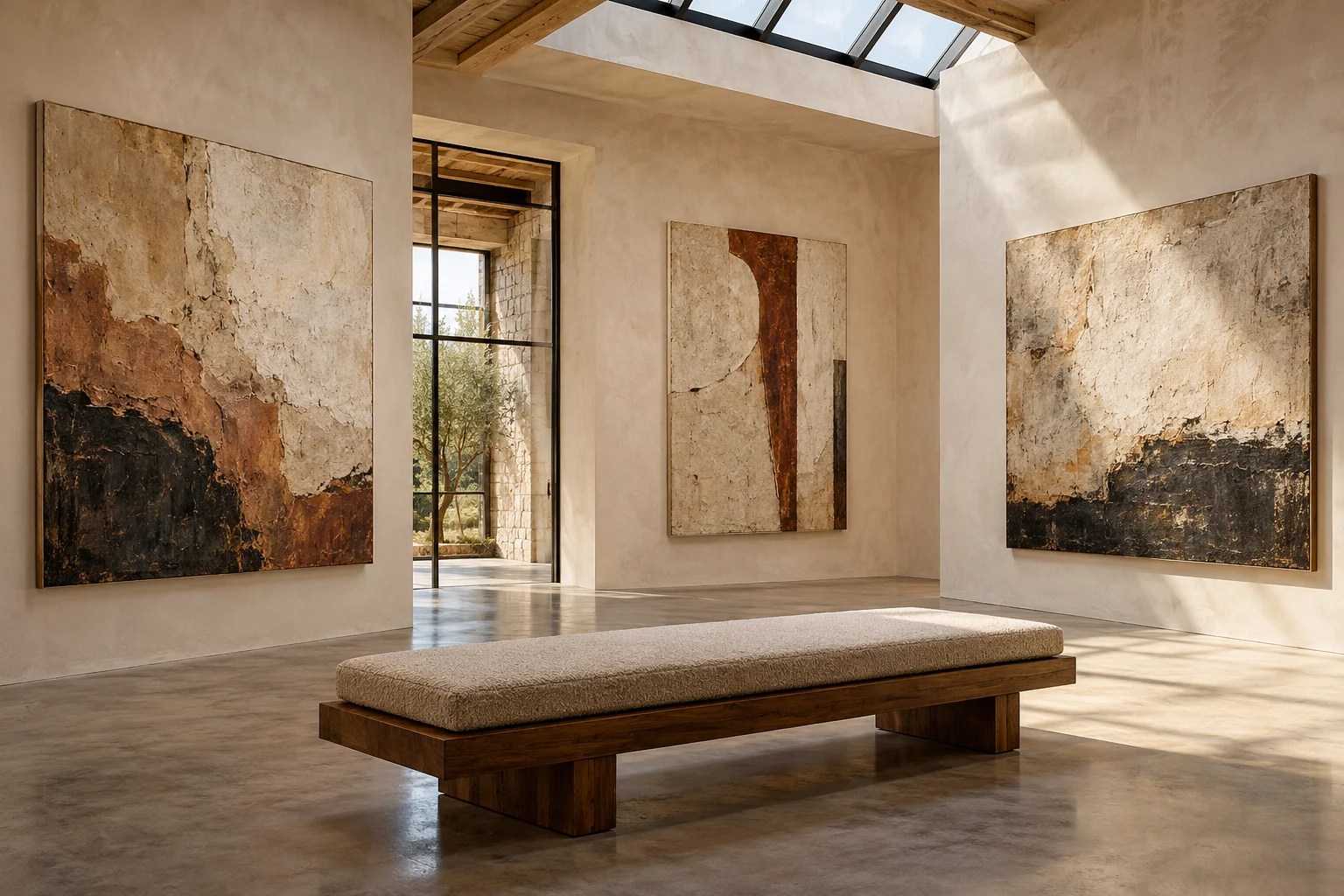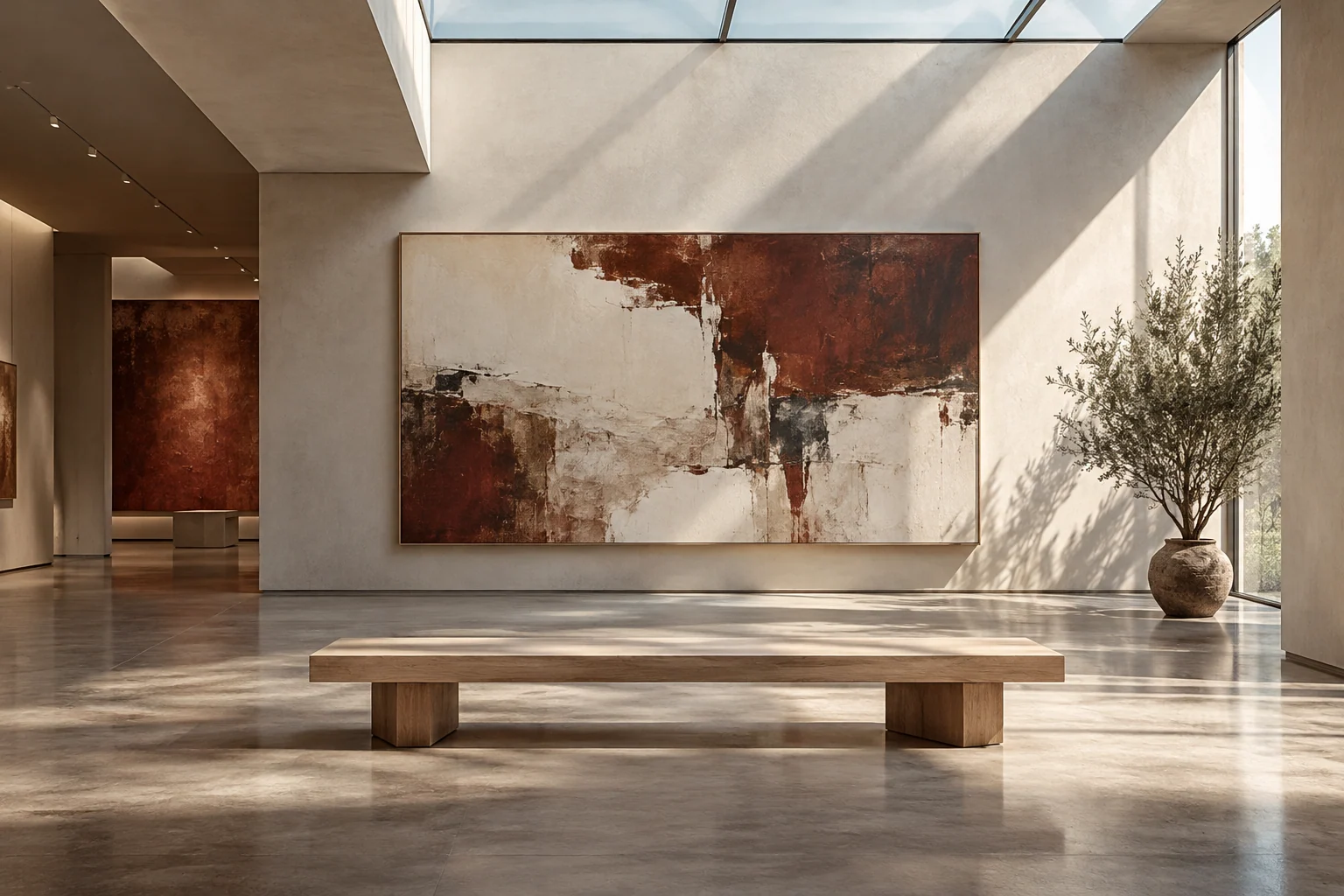
A jagged line of crimson paint cuts across a canvas of muted greys, appearing sudden and sharp. To the left, a cluster of heavy, textured pigment creates shadows that seem to shift as you walk past. These are the physical realities of the work: the weight of the color, the direction of the stroke, and the way the light hits the surface. Your first response might be a sense of unease or perhaps a sudden burst of energy—a visceral reaction to the form itself, independent of any external context.
The Gap Between Vision and View
Often, a small plaque near the frame offers a different narrative. It might describe the piece as a study in tranquility or a meditation on urban stillness. This creates a distance between what you see and what the creator intended. One perspective is rooted in the physical presence of the object, while the other is rooted in an articulated concept. Navigating this gap does not require you to decide which version is correct. Instead, the value lies in observing how your personal response interacts with the stated meaning. You might find that the explanation provides a lens through which to see the work more clearly, or you might find that the explanation feels entirely disconnected from the sensory experience in front of you.
Complexity and the Shifting Plan
This tension between an initial vision and a final result is a common experience in personal endeavors where a plan grows in complexity. For example, if you decide to renovate a small corner of your home into a dedicated studio, you might start with a simple plan for a desk and a lamp. As the project evolves, you might find yourself adding heavy shelving, specialized lighting, and custom cabinetry, turning a minor adjustment into a significant undertaking.
In such moments, the original ambition can feel disconnected from the practical reality of the space. You are left with a result that is more complex than you planned, much like an artist might end up with a painting that feels more chaotic than their initial sketch suggested. The tradeoff involves weighing the satisfaction of a grander achievement against the simplicity and ease of the original intent. A larger, more ambitious project brings more character, but it also brings more maintenance and a higher degree of difficulty in managing the space.
Assessing the New Reality
When a project grows beyond its initial boundaries, the most useful step is to step back and assess the current state of things. Ask yourself whether the new elements serve the core idea or if they have become distractions. If you are working with a professional on a home modification that has grown in scope, ask them how the current direction aligns with the functional needs you first identified. You might also ask what the long-term implications of these additions are for the room's utility.
Rather than searching for a way to revert to the start or forcing a fit, look at what is actually in front of you. The goal is not to find a way to make the result match the first sketch, but to understand the reality of what has been created and decide if that reality meets your current needs.